
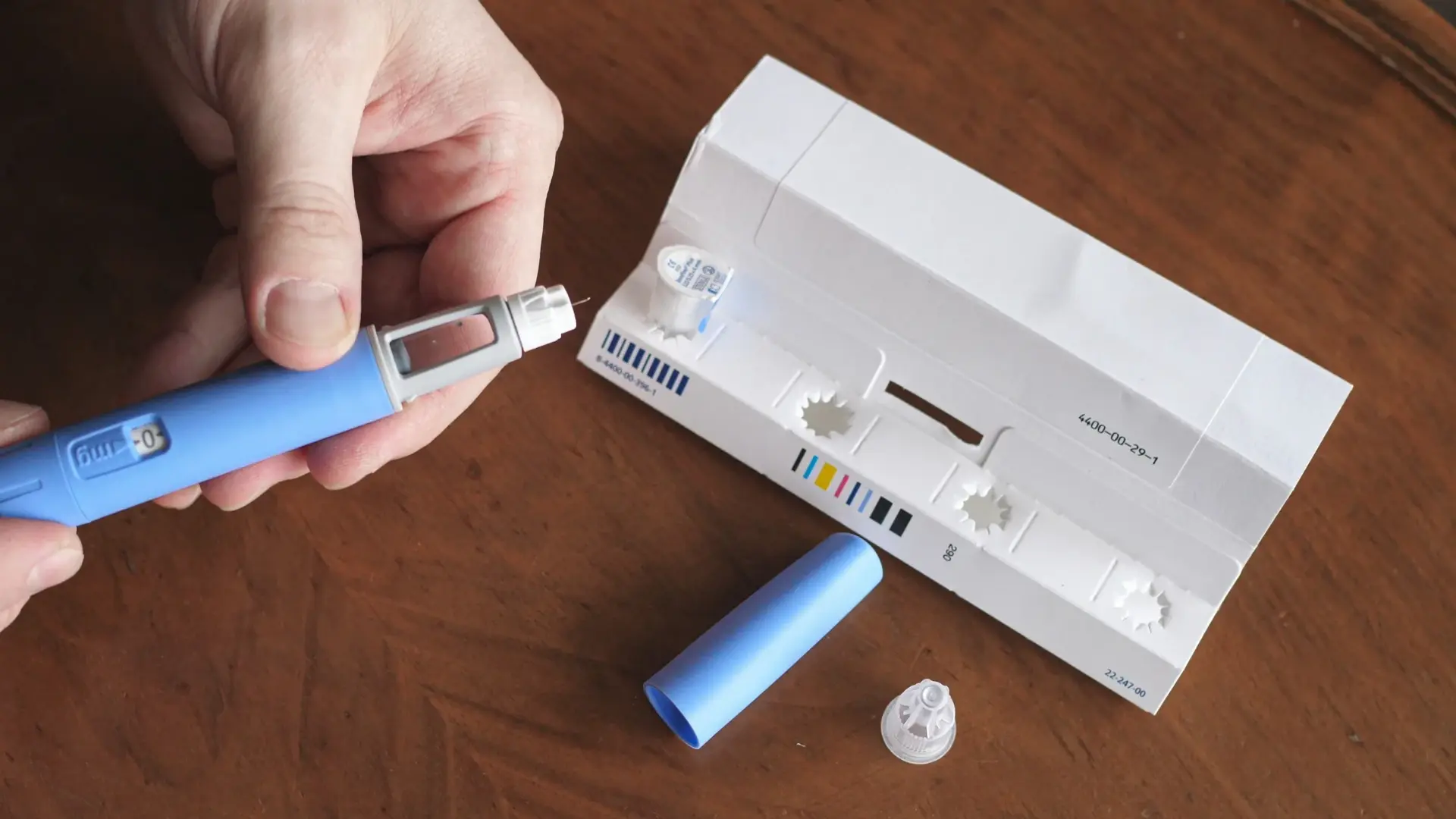
The FDA now requires a warning on all GLP-1 medicines, including Ozempic and Zepbound, for a rare eye condition that can cause permanent vision loss. Here is what is known and how anthocyanins fit into eye health.
New FDA requirement for GLP-1 medicines: what is known about optic neuropathy (NAION)
On November 9, 2026, the FDA required a new warning about a rare but serious eye condition on the labels of all GLP-1 medicines. The requirement covers Ozempic, Wegovy and Rybelsus (semaglutide), Mounjaro and Zepbound (tirzepatide), Trulicity (dulaglutide), and Victoza and Saxenda (liraglutide), among others. The condition is called non-arteritic anterior ischemic optic neuropathy (NAION), and the warning goes in the Warnings and Precautions section.
NAION occurs when blood flow drops in the front part of the optic nerve. It can cause sudden, painless vision loss in one eye, sometimes noticed on waking, and the loss can be permanent. Other signs include blind spots or tunnel vision, distorted colors and blurry central vision. Risk factors include smoking, diabetes, high blood pressure, sleep apnea, anemia and kidney disease.
To estimate how often it occurs, the FDA pooled 126 clinical trials with 134,253 patients. It identified 15 probable cases: 10 in people taking a GLP-1 and 5 in the placebo group. The incidence was 6.4 cases per 100,000 person-years with GLP-1 medicines, compared with 3.8 in the comparison groups.
In Europe, the EMA classified NAION in June 2025 as a "very rare" side effect of semaglutide, meaning up to 1 case per 10,000 people. Studies in adults with type 2 diabetes describe a risk of about double, equal to roughly one additional case per 10,000 person-years.
These data describe an association, not a proven cause. NAION also occurs without these medicines: in people over 50, it is estimated at 2.3 to 10.2 cases per 100,000 people per year. Most people who use GLP-1 medicines do not develop it, and temporary blurry vision has other common causes, such as glucose changes or dry eye. Only a health professional can tell them apart.
What to do if you use a GLP-1 or have diabetes
The guidance from regulators is the same: report any sudden change in vision quickly, and do not make decisions about your treatment on your own.
The FDA asks people to contact a health professional right away if any of these signs appear:
- Sudden, painless vision loss in one eye, sometimes noticed on waking.
- Blind spots or tunnel vision.
- Distorted colors.
- Blurry or hazy central vision.
If that happens, see a health professional immediately, ideally an eye doctor. People who have already had an episode of NAION should talk with their doctor about whether to continue or stop the medicine. That is a medical decision and should not be made alone.
Beyond the news, one rule does not change: people with diabetes should keep up their regular eye exams, because the eye is one of the organs that benefits most from catching changes early.
Eye health is built in layers, and anthocyanins are one of them
Beyond the news, caring for your eyes takes several layers: checkups with a specialist, breaks from screens, and a diet rich in colorful fruits and vegetables. Within that last layer, anthocyanins, the pigments of dark-colored fruits, are among the most studied compounds.
A 2026 review in Food Bioscience (Zhao et al., 97 articles analyzed through December 2025) organizes what is known on four fronts:
- Oxidative stress and inflammatory response: anthocyanins help neutralize free radicals and support a balanced inflammatory response in eye tissues, such as the retina.
- Microcirculation: studies with other fruits, such as blackcurrant and blueberry, report faster blood flow in eye structures in healthy people or people with mild visual fatigue.
- Visual function: some studies describe faster recovery of dark adaptation.
- Protection of retinal cells: mostly in laboratory and animal studies.
It is a fast-moving field of research. Laboratory findings are now moving into studies in people, and the authors themselves point to clinical trials as the way to confirm them. After they are consumed, gut microbiota transform anthocyanins into smaller compounds that may also contribute to their effects.
That is why the source matters. Maqui is one of the richest fruits in anthocyanins, especially delphinidins, and it has its own clinical studies on eye health. That is what comes next.
Clinical studies on MaquiBright® and Delphinol®: what was observed for eye health
MaquiBright® and Delphinol®, the standardized maqui extracts from MNL Group, have published clinical studies. These are the main results, with a link to each study for the details.
Their anthocyanins reach the bloodstream. After people consumed Delphinol®, two maqui anthocyanins were detected in the blood of healthy volunteers. This shows they are absorbed (bioavailability). Schön et al., 2018
More tears. In a placebo-controlled trial, people who took MaquiBright® for 4 weeks produced about 25% more tear fluid than the placebo group (Schirmer test). Yamashita et al., 2019
Less visual fatigue. In people who spend many hours in front of screens, the same trial reported less eye fatigue and less eye discomfort. No adverse events were reported.
A balanced inflammatory response on the eye surface. In people with dry eye, the maqui extract was associated with more tear fluid, fewer symptoms and changes in tear inflammation markers (cytokines). Kundu et al., 2023
Results from day 30. In a pilot study with 60 mg of MaquiBright® per day, tear production increased by about 50% compared with baseline, and dry eye symptoms dropped by up to about 72%. Hitoe et al., 2014
The authors attribute these effects mainly to the anthocyanins in the extract, especially the delphinidins. Together, the studies support that MaquiBright® and Delphinol® help support tear production, visual comfort and a balanced inflammatory response on the eye surface.
Frequently asked questions
Can GLP-1 medicines affect vision?
In November 2026, the FDA required a warning about a possible increased risk of NAION for all GLP-1 medicines. It is a rare condition that causes sudden, painless vision loss in one eye. If that symptom appears, contact a health professional right away.
What are anthocyanins and why are they studied in the eye?
They are pigments found in dark-colored fruits such as maqui, blueberry and blackcurrant. They are studied for their relationship with oxidative stress, the inflammatory response and microcirculation in eye tissues.
What has been studied about maqui and eye health?
Studies in people with standardized maqui extracts, such as MaquiBright® and Delphinol®, observed higher tear production and less visual fatigue in people who use screens.
These statements have not been evaluated by the Food and Drug Administration.
MNL Group develops nutraceutical ingredients intended to support normal physiological function and general well-being. These ingredients are not intended to diagnose, treat, cure, or prevent any disease, nor to replace medical or pharmacological treatment.
Sources
- FDA. Drug Safety Communication: FDA requires safety labeling changes for GLP-1 receptor agonists due to potential increased risk of NAION (November 9, 2026)
- EMA. PRAC concludes eye condition NAION is a very rare side effect of semaglutide medicines (June 6, 2025)
- Zhao D. et al. (2026). Eye protection by anthocyanins. Food Bioscience 82, 109322
- Schön C. et al. (2018). Bioavailability study of maqui berry extract in healthy subjects. Nutrients 10(11), 1720
- Yamashita S. et al. (2019). Effects of MaquiBright® on improving eye dryness and fatigue in humans: a randomized, double-blind, placebo-controlled trial
- Kundu G. et al. (2023). Effect of maqui-berry extract in dry eye disease. Indian J Ophthalmol 71, 1613-8
- Hitoe S. et al. (2014). MaquiBright® increases tear fluid and reduces dry eye symptoms: clinical pilot