
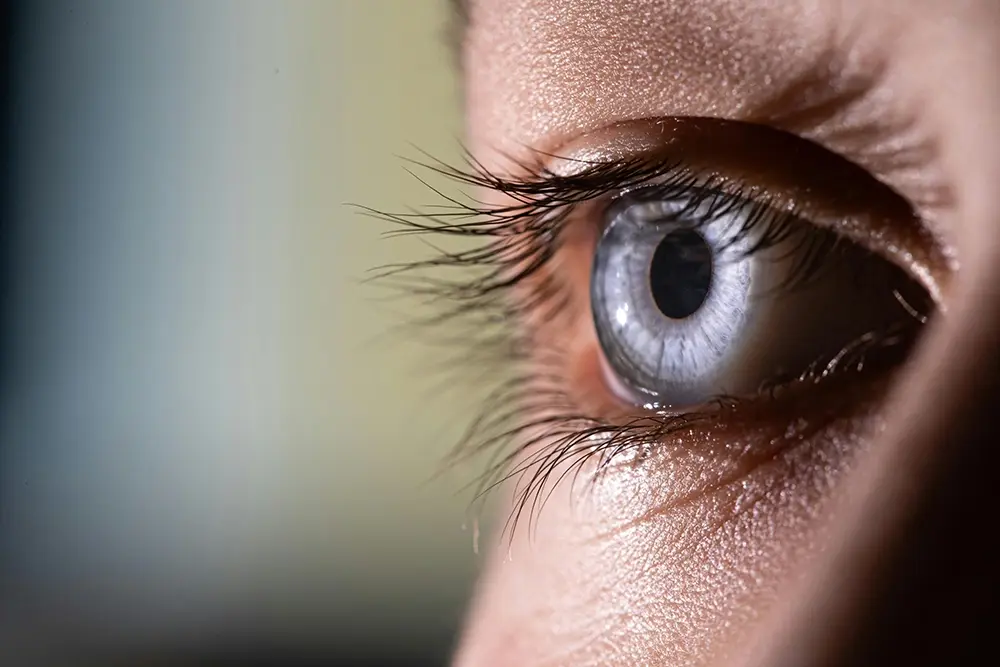
As screen time reaches new highs, millions of people are experiencing digital eye strain — here's what's really happening in your eyes, and how MaquiBright® can help.
If you spend hours in front of a screen each day — whether at home, at the office, or both — you've likely felt it: tired, dry, or uncomfortable eyes by end of day. You're not imagining it. Digital eye strain is one of the most widespread occupational health concerns of the hybrid work era, and its root cause goes deeper than most people realize.
While much of the conversation has focused on blue light exposure, emerging research points toward a more complex and physiological mechanism behind this condition — one that involves blinking behavior, tear film stability, and ocular surface health.
Why Does Screen Time Cause Dry Eyes? It Goes Beyond Blue Light
When working in front of digital screens, the human blink rate can decrease by up to 60%. This seemingly small change has significant consequences.
Reduced blinking leads to:
- Increased tear evaporation from the ocular surface
- Instability of the tear film that protects the eye
- Greater exposure of the ocular surface to environmental stress
- Inflammatory responses over time if left unaddressed
Together, these factors contribute to what is now widely recognized as screen-induced dry eye — a condition characterized by discomfort, visual fatigue, dryness, and reduced visual performance.
Can Antioxidants Support Eye Health? What the Research Shows
Oxidative stress plays a key role in the development of ocular surface inflammation. Continuous screen exposure, combined with environmental factors, can increase oxidative load at the cellular level — including in the lacrimal glands responsible for tear production.
This is where targeted nutritional support becomes relevant.
Maqui berry (Aristotelia chilensis), native to the ecosystems of southern Chile and Argentina, is recognized as the richest known natural source of delphinidins — a unique class of anthocyanins with potent antioxidant properties. Among all anthocyanin types, delphinidins carry the greatest free-radical-neutralizing capacity, and maqui has them in concentrations that surpass any other known fruit.
These compounds have been studied for their potential to:
- Help support natural tear production by protecting lacrimal gland cells from oxidative damage
- Help support the eye's response to oxidative stress on the ocular surface
- Improve overall eye comfort in individuals with prolonged screen exposure
MaquiBright®: Clinically Studied Support for Eye Comfort
MNL Group's standardized maqui extract, MaquiBright®, has been specifically developed to support eye health through mechanisms studied in peer-reviewed research. It is standardized to a minimum of 25% delphinidins per batch — ensuring consistent potency.
A growing body of clinical research highlights its potential:
Hitoe, Tanaka & Shimoda — a clinical pilot trial published in Panminerva Medica found that supplementation with MaquiBright® helped support natural tear production, targeting a key factor associated with dry eye discomfort. Both 30 mg and 60 mg daily doses produced improvements in Schirmer tear test scores versus baseline.
Panminerva Med. 2014;56(3 Suppl 1):1–6. PMID: 25208615 ↗Yamashita, Suzuki, Yamamoto, Iio & Yamada — a rigorous RCT in 74 visual display terminal workers published in the Journal of Traditional and Complementary Medicine reported significant improvements in tear fluid production (P=0.005) and reduced eye fatigue (P=0.047) in participants taking MaquiBright® 60 mg/day for 4 weeks versus placebo.
J Tradit Complement Med. 2019;9(3):172–178. DOI: 10.1016/j.jtcme.2018.11.001 ↗👉 Explore the full list of peer-reviewed studies in our clinical studies section
Which Brands Use MaquiBright®? The U.S. Market Has Spoken
When leading nutraceutical brands choose an ingredient, it signals trust, scientific validation, and market demand. MaquiBright® has earned exactly that, with recognized U.S. brands incorporating it into their eye health formulations:
- NOW Foods — Eye Moisturize with MaquiBright®
- Life Extension — Tear Support with MaquiBright®
- Swanson — Maqui Berry Extract Dry Eye Formula
This growing presence reinforces its position as a trusted standard for eye health solutions in a highly competitive nutraceutical market.
What Does a Complete Approach to Digital Eye Health Look Like?
Addressing digital eye strain requires understanding its underlying causes — not just the symptoms. Moving beyond simplified narratives, solutions must consider:
- Blink dynamics — training conscious blinking habits during screen use
- Tear film stability — nutritional support for lacrimal gland function
- Oxidative balance — protecting ocular tissues from free radical damage
- Long-term ocular health — consistent, clinically validated approaches over time
By bridging nature, science, and clinical validation, MaquiBright® offers a forward-looking approach to supporting ocular comfort in the digital age.
Explore products with MaquiBright®
Find supplements from leading U.S. brands formulated with clinically studied maqui berry extract.
Frequently Asked Questions
What is digital eye strain?
Digital eye strain (also called Computer Vision Syndrome) refers to a group of eye and vision-related problems caused by extended screen use. Symptoms include dry eyes, blurred vision, eye fatigue, headaches, and neck or shoulder discomfort. It is driven primarily by reduced blink rate and increased oxidative stress on the ocular surface — not simply by blue light exposure.
How can MaquiBright® help with dry eyes from screens?
MaquiBright® is a standardized maqui berry extract rich in delphinidins. Clinical studies have shown it may help support natural tear production, help support the eyes' response to oxidative stress, and improve overall eye comfort — targeting the physiological mechanisms behind screen-induced dry eye rather than masking symptoms.
Is there scientific evidence behind MaquiBright® for eye health?
Yes. Multiple peer-reviewed human studies, including a randomized double-blind placebo-controlled trial (Yamashita et al., 2019), have demonstrated significant improvements in tear fluid production and reduced eye fatigue in individuals exposed to prolonged screen use. The full reference list is available at mnl-group.com/en/clinical-studies.
How is maqui berry different from other antioxidants like vitamin C or astaxanthin?
Each antioxidant works through different mechanisms. Maqui berry's unique advantage is its exceptional concentration of delphinidins — the most potent antioxidant subgroup of anthocyanins — and specific peer-reviewed research on ocular tissue and lacrimal function. Unlike astaxanthin (marine-derived), maqui is fully plant-based. See how maqui compares to other superfruits →
The information in this article is based on published studies and is intended for educational purposes only. Individual results may vary. Always consult your healthcare professional before starting any new supplement.
- Hitoe S, Tanaka J, Shimoda H. MaquiBright™ standardized maqui berry extract significantly increases tear fluid production and ameliorates dry eye-related symptoms in a clinical pilot trial. Panminerva Med. 2014;56(3 Suppl 1):1–6. PMID: 25208615 ↗
- Yamashita S, Suzuki N, Yamamoto K, Iio S, Yamada T. Effects of MaquiBright® on improving eye dryness and fatigue in humans: A randomized, double-blind, placebo-controlled trial. J Tradit Complement Med. 2019;9(3):172–178. DOI: 10.1016/j.jtcme.2018.11.001 ↗