
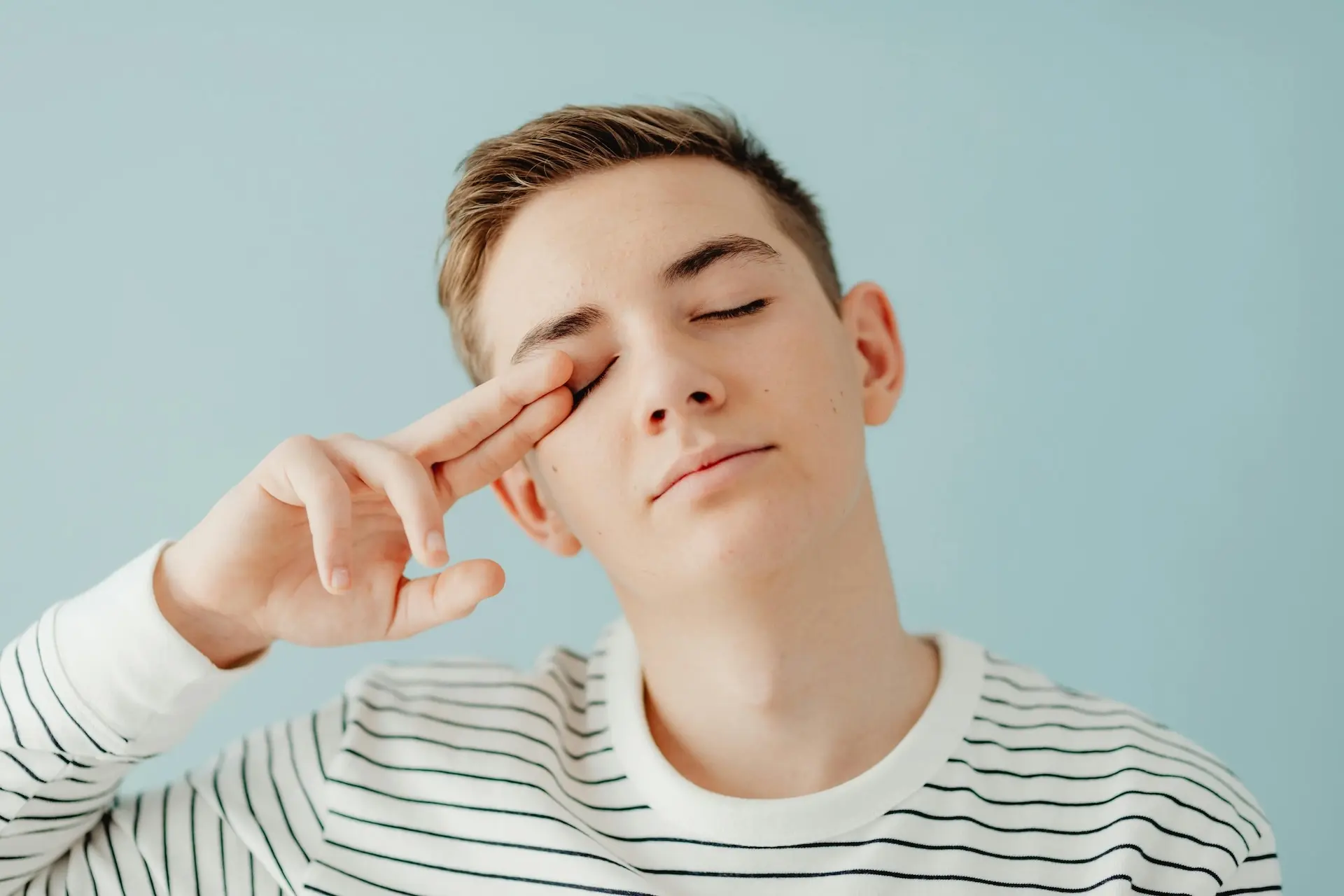
Allergy season brings runny noses and itchy eyes. But there's a lesser-known consequence that many people never connect to their allergy medication: dry eye. Here's what's happening — and what you can do to help your eyes through it.
If you take allergy medication every spring and find your eyes feeling dry, gritty, or uncomfortable — even after the sneezing stops — you're not imagining it.
What most people don't realize is that spring is a double hit for eye comfort. On one side, the environment itself is harder on your eyes: more wind, more UV exposure, more pollen in the air. On the other, the medications many people take to manage allergies have a well-documented side effect that's rarely mentioned on the box: they reduce tear production.
This article explains what's actually happening to your eyes during allergy season, why the two problems — allergic irritation and tear film instability — are related but distinct, and what role nutritional support may play in maintaining ocular comfort while you get through it.
Allergy Season and Your Eyes: Two Different Problems
It's easy to lump all spring eye discomfort under "allergies." But clinically, there are two different things going on, and they work through completely different mechanisms.
Allergic conjunctivitis: the immune response
When pollen, dust mites, or pet dander reach your eye surface, your immune system releases histamine. That's what causes the classic allergy eye symptoms: itching, redness, swelling, and excessive watery discharge. This is an active immune response, and it's what antihistamines are designed to manage.
Dry eye: the tear film problem
Dry eye is a different condition. It occurs when the eye doesn't produce enough quality tears to maintain a stable tear film on the ocular surface. Symptoms include burning, grittiness, fluctuating vision, and that sensation of something being in your eye — without the intense itching typical of allergic reactions.
The two conditions can occur together, which is exactly what happens to many people in spring. And that's where things get complicated.
The Antihistamine Effect Nobody Talks About
Here's the part most people find surprising: the same medication you're taking to manage your allergies may be making your eye dryness worse.
Antihistamines work by blocking histamine receptors throughout the body — not just in the eyes. In doing so, they also suppress the parasympathetic nervous system signals that regulate fluid secretion across the body, including the lacrimal glands, which are responsible for producing the aqueous layer of your tears.
Foutch et al. — published in Clinical Ophthalmology, this study demonstrated that systemic antihistamines — including commonly used over-the-counter brands — can significantly reduce tear volume after just a few days of use, increasing corneal staining and decreasing tear film stability.
Clin Ophthalmol. 2020;14:1965–1971. PMC7355746 ↗Ousler et al. — published in Annals of Allergy, Asthma & Immunology, this study evaluated the ocular drying effects of loratadine (Claritin) and cetirizine (Zyrtec), finding measurable reductions in tear film stability with both second-generation antihistamines.
Ann Allergy Asthma Immunol. 2004;93(5):460–464. PMID: 15562885 ↗First-generation antihistamines (like diphenhydramine/Benadryl) have the strongest drying effect. Second-generation options (like loratadine/Claritin or cetirizine/Zyrtec) are less aggressive — but all oral antihistamines carry some degree of this effect on tear production.
Why Spring Is Especially Hard on Your Tear Film
Beyond medication effects, several environmental factors converge in spring that independently stress your tear film:
- More wind — spring winds accelerate tear evaporation from the ocular surface, especially during outdoor activity
- Increased UV exposure — UV levels rise significantly in spring, even on cloudy days; prolonged UV exposure contributes to oxidative stress on ocular tissues
- Heating to air conditioning transitions — indoor air quality shifts as heating systems run down and AC starts up, both of which can reduce ambient humidity
- More screen time — people with allergy symptoms often spend more time indoors in front of screens, which reduces blink rate and accelerates tear evaporation
Supporting Your Tear Film During Allergy Season
The good news is that dry eye — unlike the allergic response itself — responds well to supportive measures.
Hydration and environment
- Stay well hydrated — systemic dehydration compounds the drying effects of antihistamines on all mucous membranes, including tear glands
- Use a humidifier indoors, especially if you're spending more time inside during high-pollen days
- Wear wraparound sunglasses outdoors to block wind and UV
Screen habits
- Apply the 20-20-20 rule: every 20 minutes, look 20 feet away for 20 seconds — this encourages full blinks and helps restore the tear film
- Position screens slightly below eye level to reduce lid aperture and slow tear evaporation
Nutritional support for the lacrimal glands
The lacrimal glands — responsible for tear production — are susceptible to oxidative stress, particularly when they're already under pressure from medication effects and environmental exposure.
MaquiBright® is a standardized maqui berry extract rich in delphinidins — a class of anthocyanins studied specifically for their potential to support lacrimal gland function and tear fluid production.
Hitoe, Tanaka & Shimoda — published in Panminerva Medica, this clinical pilot trial found that MaquiBright® supplementation helped support natural tear production in participants with dry eye symptoms, with improvements in Schirmer tear test scores at both 30 mg and 60 mg daily doses.
Panminerva Med. 2014;56(3 Suppl 1):1–6. PMID: 25208615 ↗Yamashita, Suzuki, Yamamoto, Iio & Yamada — an RCT in 74 visual display terminal workers published in the Journal of Traditional and Complementary Medicine reported significant improvements in tear fluid production (P=0.005) and reduced eye fatigue (P=0.047) in participants taking MaquiBright® 60 mg/day for 4 weeks versus placebo.
J Tradit Complement Med. 2019;9(3):172–178. DOI: 10.1016/j.jtcme.2018.11.001 ↗It's important to be clear: MaquiBright® is not an allergy treatment and does not address the immune mechanism behind allergic conjunctivitis. What it may help support is the underlying tear film stability that allergy season — and the medications that come with it — can put under stress.
👉 View all peer-reviewed clinical studies on MaquiBright®
When to See a Doctor
Not all eye discomfort during allergy season can or should be managed at home. See an eye care professional if:
- Symptoms are severe, include significant pain, or come with vision changes
- You're unsure whether your symptoms are from allergies, dry eye, or another condition
- Over-the-counter approaches aren't providing adequate relief after a few weeks
- You're considering changing your allergy medication due to ocular side effects
Explore products with MaquiBright®
Find supplements from leading U.S. brands formulated with clinically studied maqui berry extract.
Frequently Asked Questions
Can allergy medication cause dry eyes?
Yes. Systemic antihistamines — including commonly used over-the-counter medications like Benadryl, Claritin, and Zyrtec — can reduce tear production as a side effect. This occurs because they suppress the parasympathetic signals that regulate fluid secretion, including in the lacrimal glands. First-generation antihistamines tend to have a stronger drying effect than second-generation ones, but all carry some risk.
What's the difference between allergy eyes and dry eyes?
Allergic conjunctivitis is an immune response driven by histamine: symptoms include intense itching, redness, and watery discharge. Dry eye is a tear film instability problem: symptoms include burning, grittiness, and fluctuating vision, typically without intense itching. The two can occur simultaneously, especially during allergy season.
Can MaquiBright® help with allergy eye symptoms?
MaquiBright® is not an allergy treatment and does not address the histamine response behind allergic conjunctivitis. However, it has been studied for its potential to support tear fluid production and reduce oxidative stress on the ocular surface — which are relevant to the dry eye component that often accompanies or worsens during allergy season. Always consult your healthcare professional before starting any new supplement.
Is it safe to take MaquiBright® alongside allergy medication?
MaquiBright® is a standardized botanical extract and there are no known interactions with common antihistamines documented in the peer-reviewed literature. However, as with any supplement, consult your healthcare professional before combining it with medications, especially if you have any underlying conditions.
How long does allergy-related dry eye last?
For most people, dry eye symptoms that worsen during allergy season improve once pollen counts drop and antihistamine use decreases. However, people with underlying dry eye disease may find that seasonal triggers unmask a condition that benefits from ongoing management beyond allergy season.
Discover More
👉 MaquiBright® — clinically studied support for eye health
👉 Peer-reviewed research — Clinical Studies
👉 Find products with MaquiBright®
👉 Digital Eye Strain in the Hybrid Work Era: A Deeper Look at Screen-Induced Dry Eye
👉 Maqui vs Açaí, Goji & Blueberries: The Ultimate Superfruit Face-Off
The information in this article is for educational purposes only and does not constitute medical advice. Individual results may vary. Always consult your healthcare professional before starting any new supplement or changing your medication regimen.
- Foutch BK, et al. Effects of oral antihistamines on tear volume, tear stability, and intraocular pressure. Clin Ophthalmol. 2020;14:1965–1971. PMC7355746 ↗
- Ousler GW, et al. An evaluation of the ocular drying effects of 2 systemic antihistamines: loratadine and cetirizine hydrochloride. Ann Allergy Asthma Immunol. 2004;93(5):460–464. PMID: 15562885 ↗
- Hitoe S, Tanaka J, Shimoda H. MaquiBright™ standardized maqui berry extract significantly increases tear fluid production and ameliorates dry eye-related symptoms in a clinical pilot trial. Panminerva Med. 2014;56(3 Suppl 1):1–6. PMID: 25208615 ↗
- Yamashita S, et al. Effects of MaquiBright® on improving eye dryness and fatigue in humans: a randomized, double-blind, placebo-controlled trial. J Tradit Complement Med. 2019;9(3):172–178. DOI: 10.1016/j.jtcme.2018.11.001 ↗